Light, lines and layers: Street photography in Canberra
One of the biggest lessons I’ve learnt through street photography is that it isn’t just about what’s in front of the lens; it’s about how you see it.
This approach resonates with the Japanese concept of yutori (ゆとり), or intentionally slowing down to appreciate the beauty of nature and life in all its spaciousness. Often when I begin a street photography shoot, I’ll spend the first 20 minutes not taking any photos to get my eye in. Where is the light? How are people interacting with their environment? Who is the ‘main character’? Absorbing the scene first allows you to capture with greater purpose than the ‘spray-and-pray’ approach that shaped my first shoots.
For this shoot, I wanted to capture the contrasting energy of Boxing Day in Civic; the Canberra Centre was heaving with bargain-hungry shoppers, yet on the other side of Northbourne Avenue was a sparse maze of towering office buildings, construction fences and the odd suitcase-toting international student.
My goal was to use light to carve paths, objects to frame subjects and perspective to make the ordinary feel cinematic. Here’s how that played out, all using the unique rendering of the Lumix 14mm f/2.5.
Using the city to frame itself
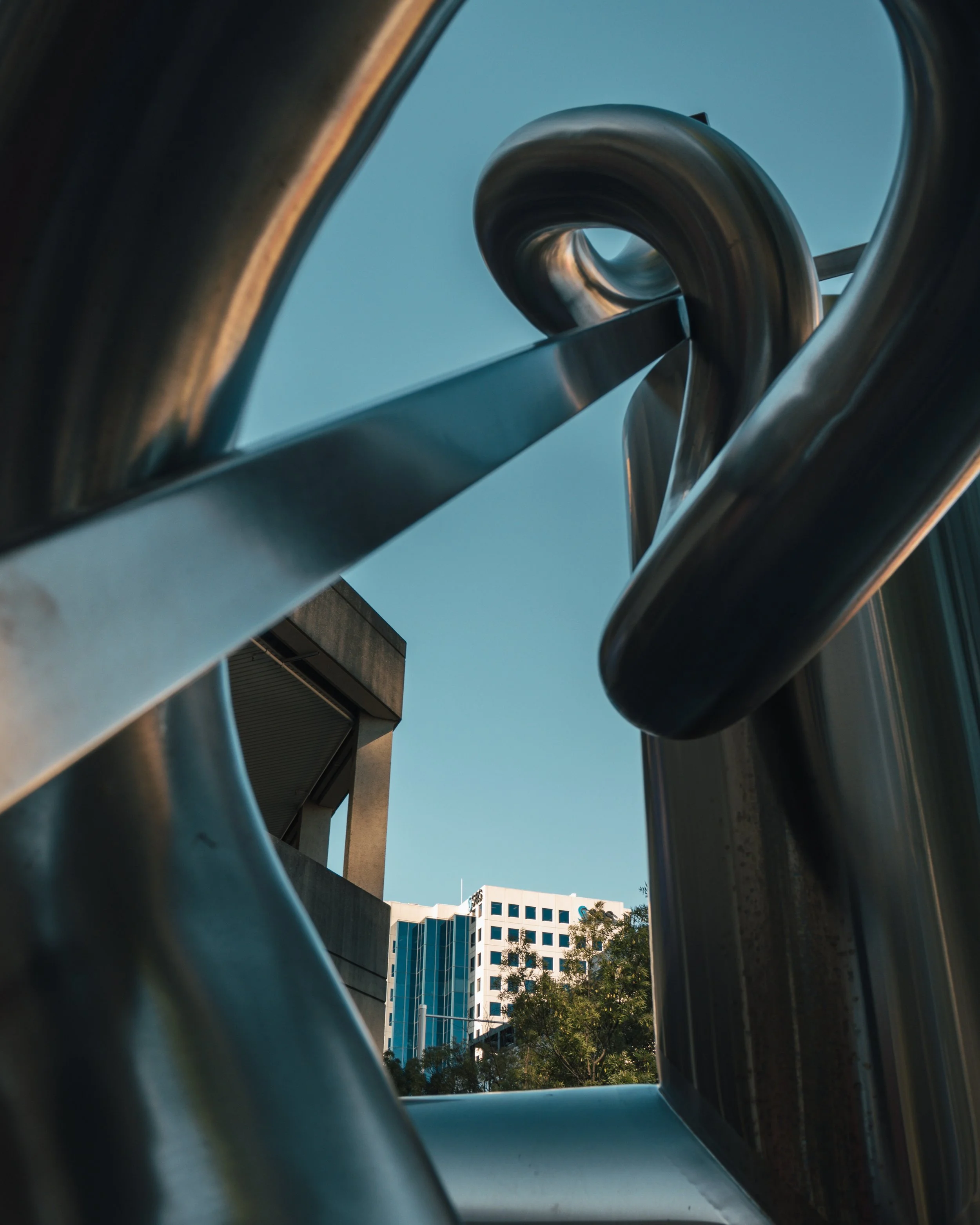
There’s an interesting sculpture of straight and twisting metal outside the Canberra Health Services building on the corner of Moore and Alinga streets. I’ve used it before as a v-shaped frame to shoot crossing pedestrians, but this time I switched angles and aimed higher, letting the artwork’s curves slice the frame into abstract shapes. Through that tunnel of steel, the city peeks out – a grid of windows against a clean blue sky. Shooting low exaggerated the sculpture’s presence, turning it into a foreground giant. In the edit, I cooled the shadows on the metal and warmed the highlights on the sky for contrast.
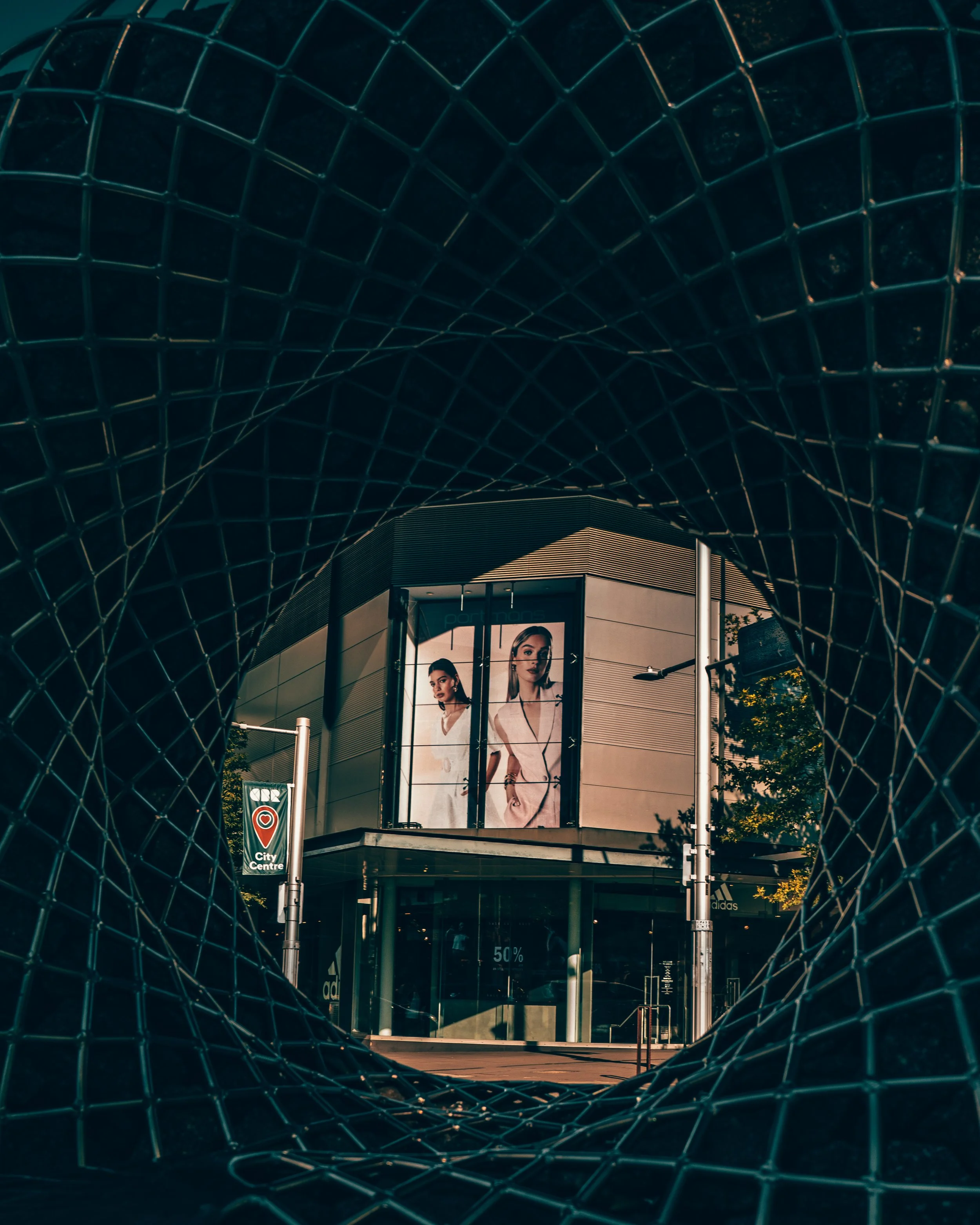
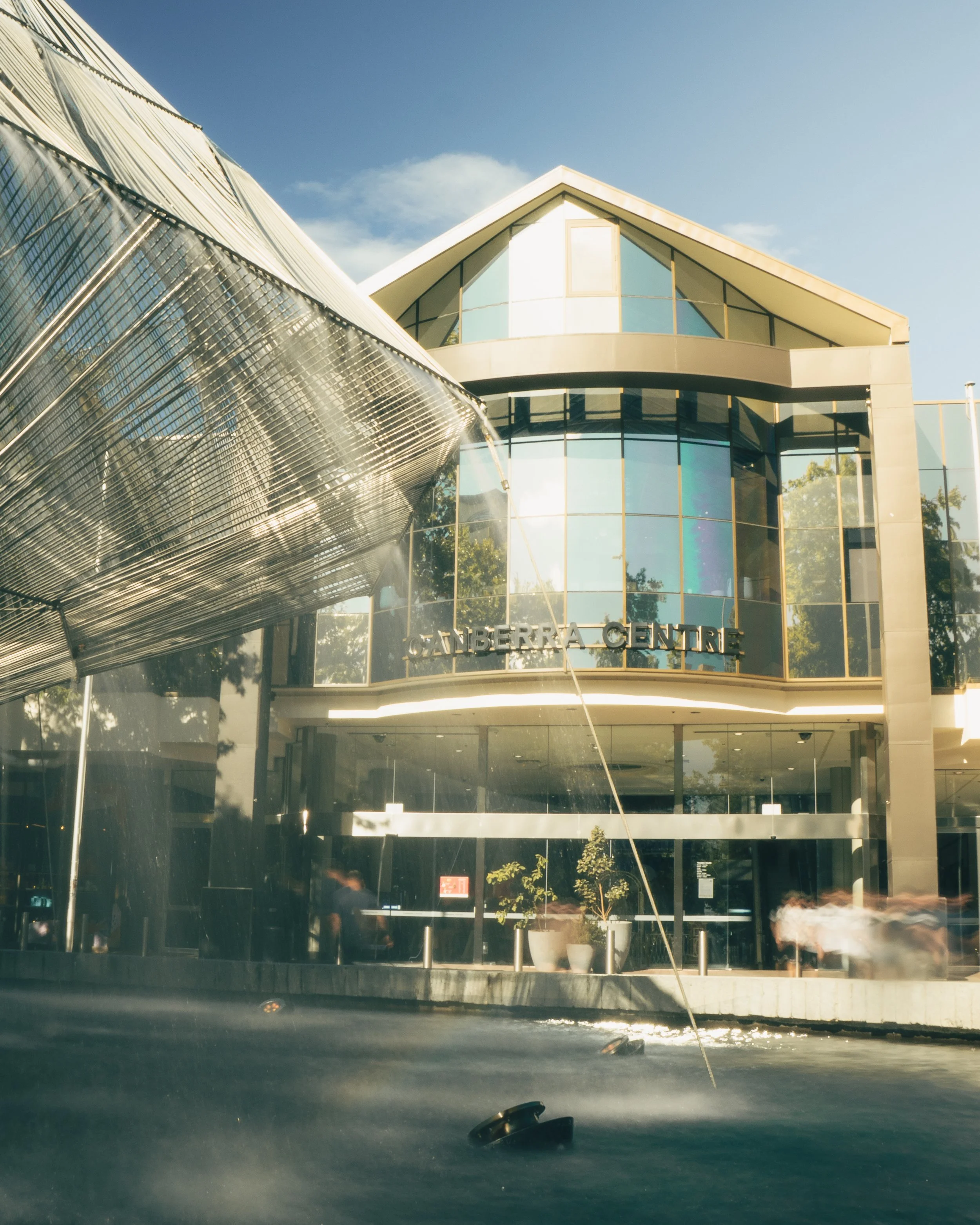
Outside the Canberra Centre, I found a wire-mesh, donut-shaped installation that provided a natural vignette, pulling the viewer’s eye toward a storefront advertisement beyond. I was originally ‘camping’, hoping to capture a passerby below as my subject before I realised I actually had a professional fashion model staring back at me. The mesh was almost black in-camera, so I lifted shadows just enough to reveal texture without killing the mood. Split-toning with warm highlights and cool shadows aims to give the image depth.
Looking for leading lines and juxtapositions
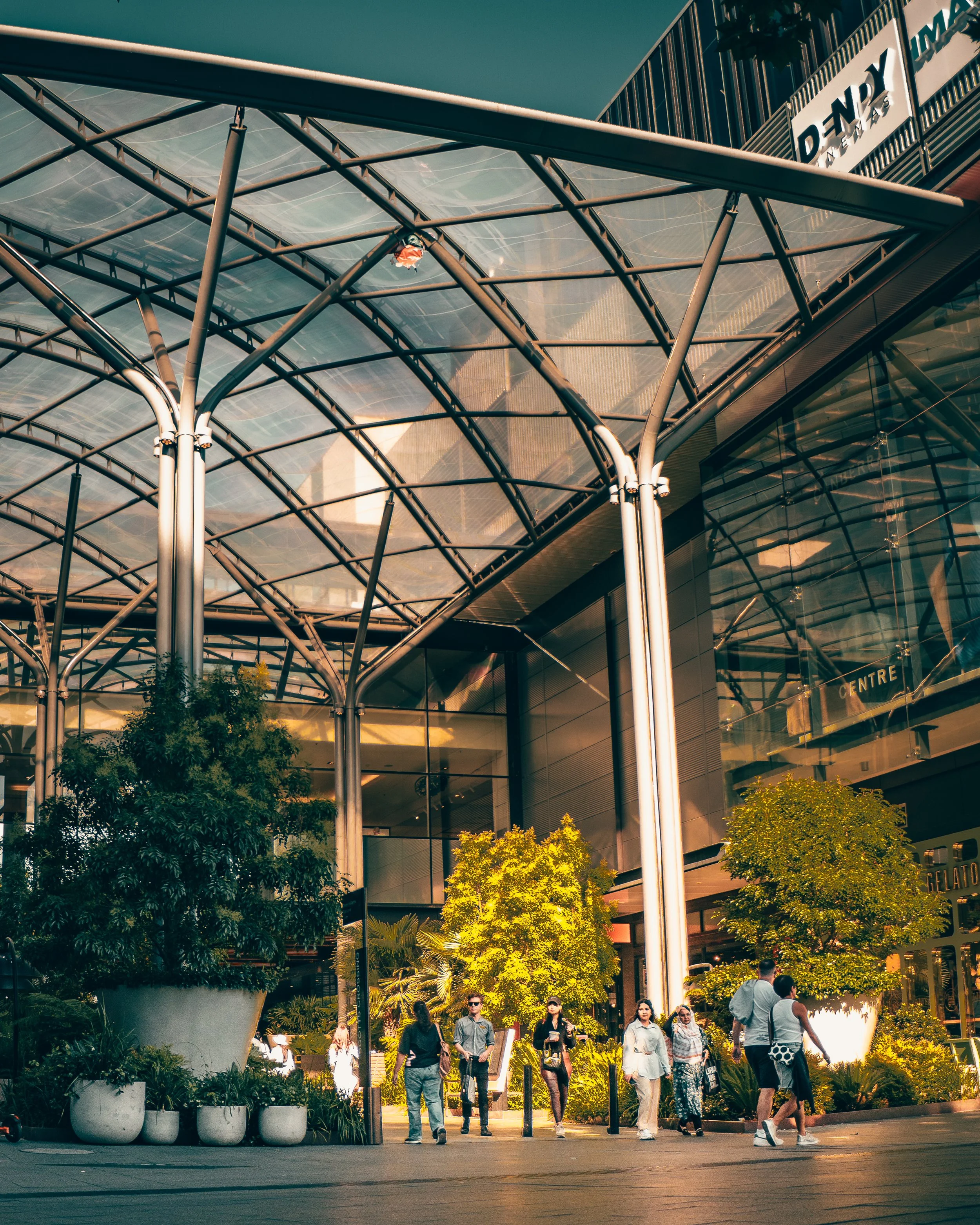
Still outside the Canberra Centre, I wanted to harness architectural framing and light to create depth and visual hierarchy. The steel canopy structure acts as a dominant compositional element; its sweeping curves and intersecting lines forming strong leading lines that guide the viewer’s gaze toward the group of people below. Shooting from a slightly lower angle allowed me to amplify the sense of scale. The warm sunlight striking the greenery contrasts beautifully with the cooler tones of the glass and steel, creating a dynamic interplay of colour and texture.
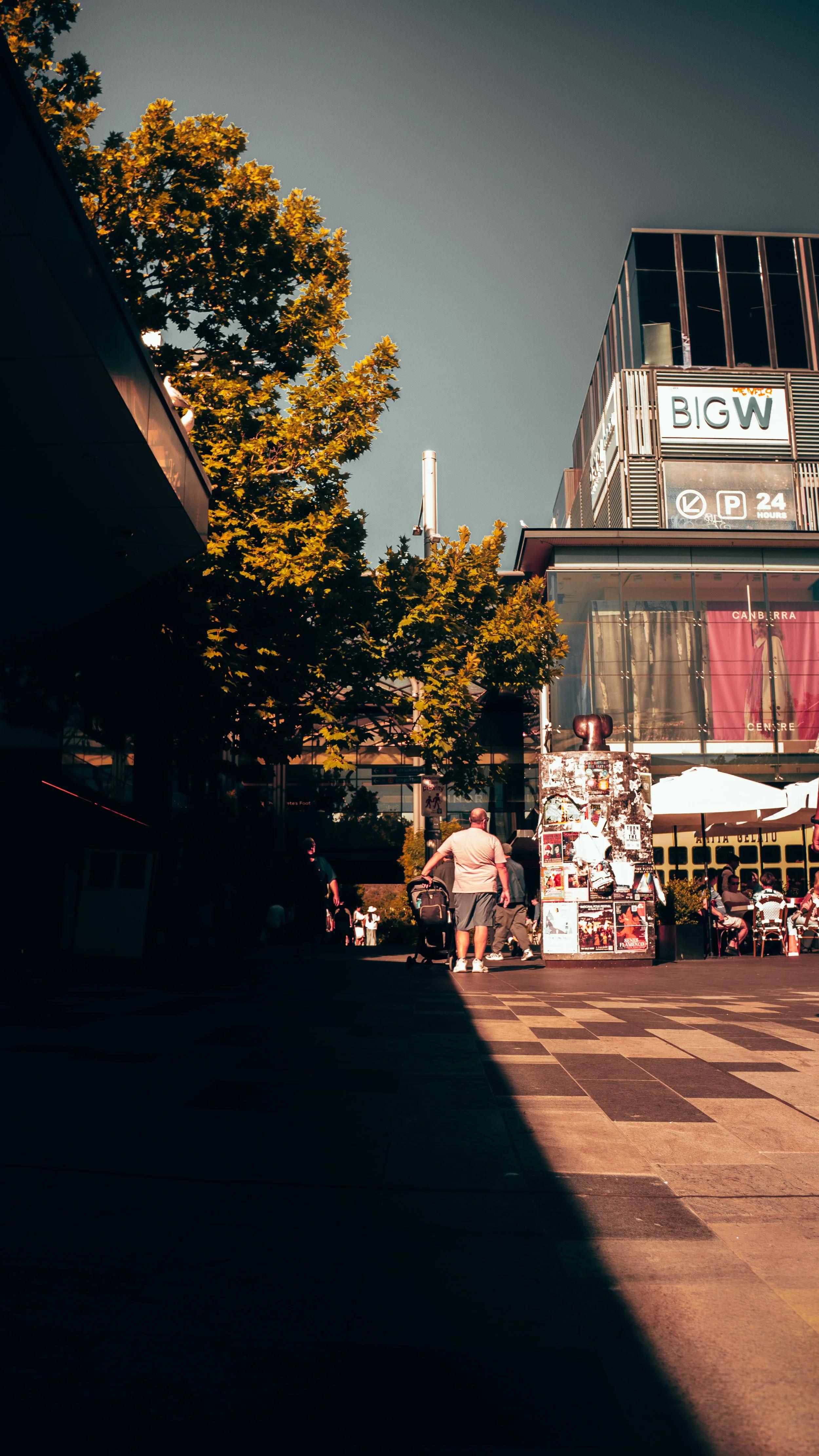
Just across the way outside Via Dolce, I saw deep shadows contrasting with a sunlit pavement to form natural leading lines. This aims to guide the viewer’s eye toward the central area of activity and then upward to the signage and architecture, while the warm colour grade plays up the golden hour glow.
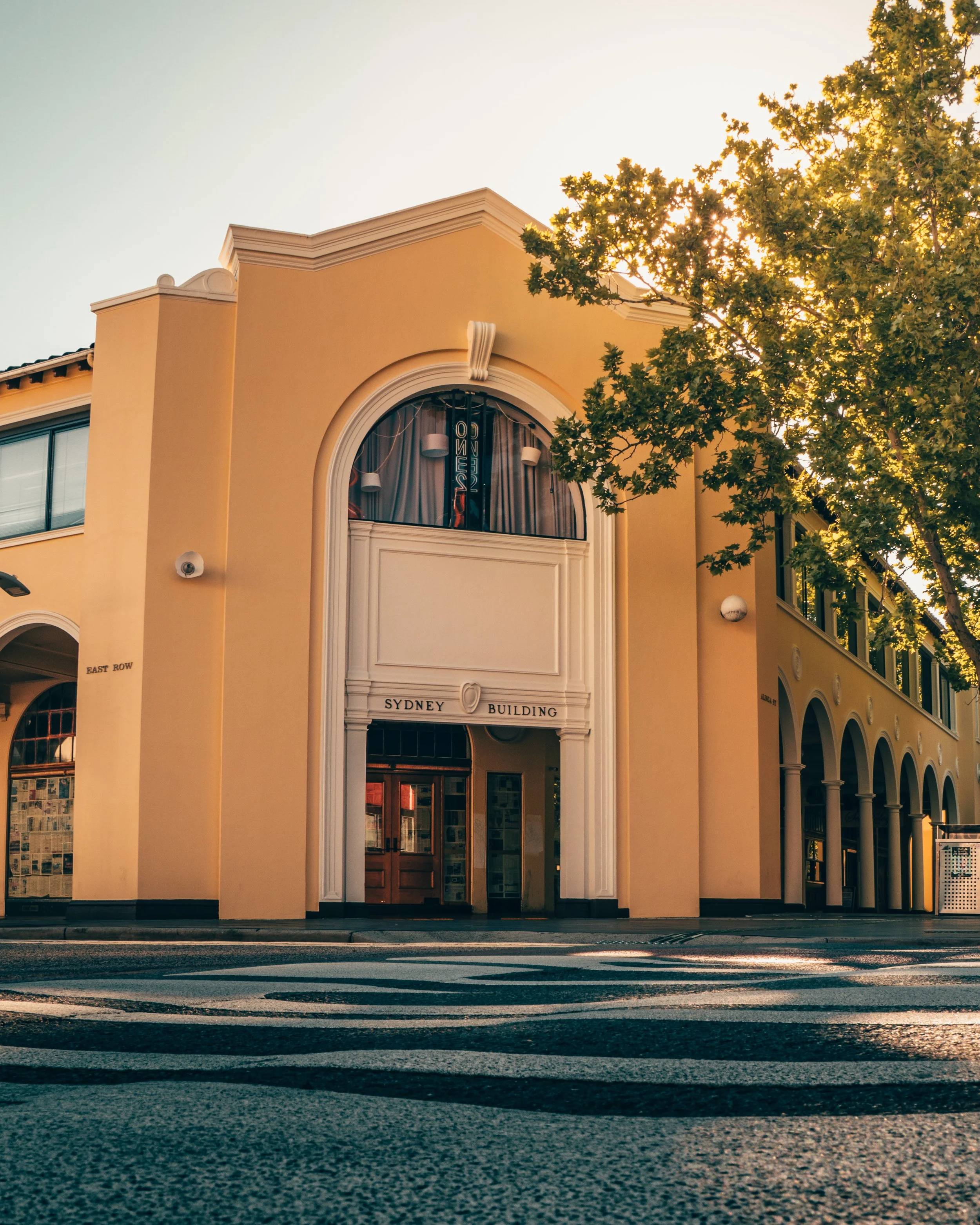
I again dropped low for the shot of the Sydney Building, letting the lines created by the dappled light on the road to guide the eye to the arches. Golden-hour light bathed the façade, so I leaned into that warmth while cooling the arcade shadows for balance. A slight crop tightened the frame, and perspective correction kept the architecture honest.
I also had a lovely interaction with some kids while I was getting this shot that you can see (along with other POV content from this shoot) here.
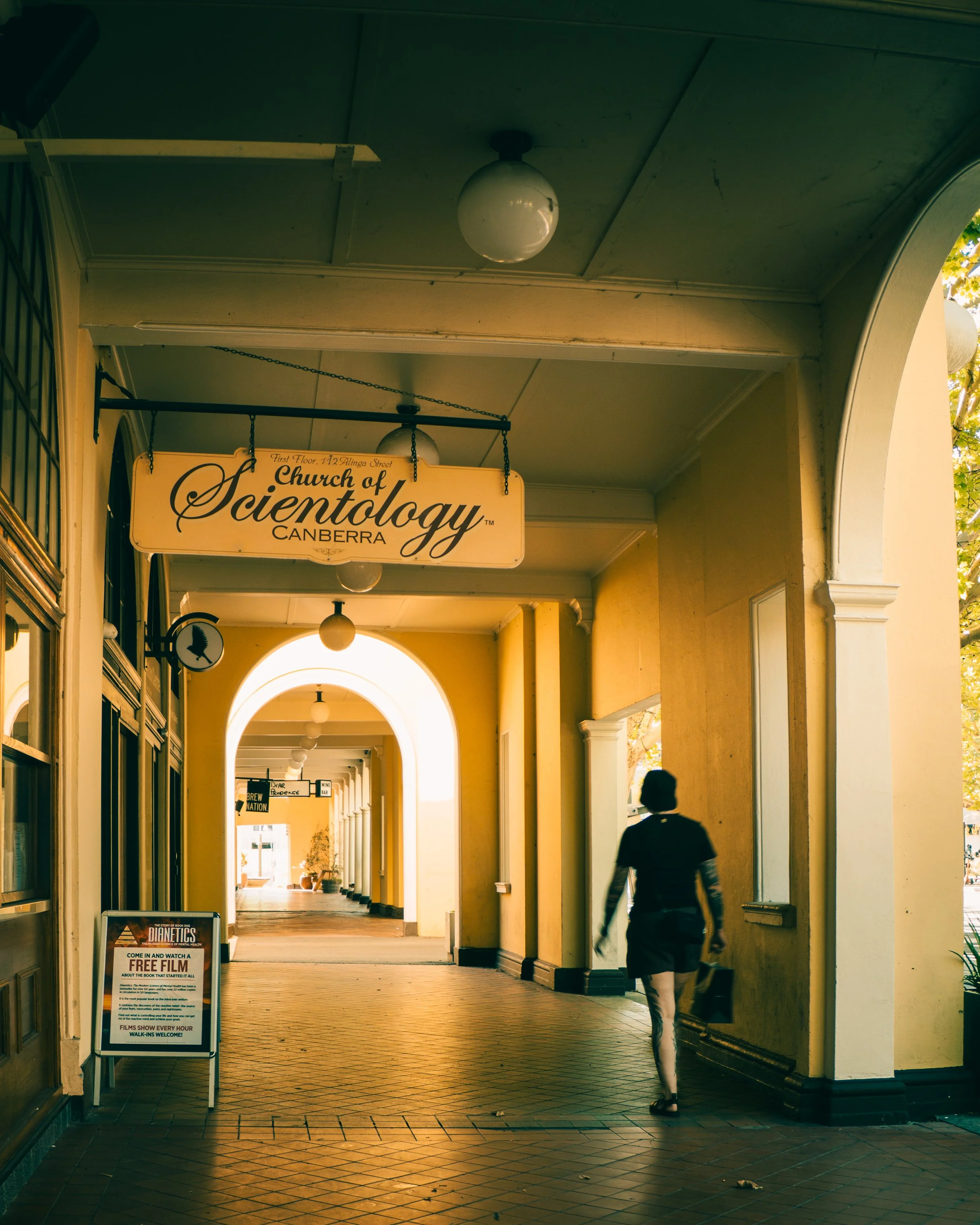
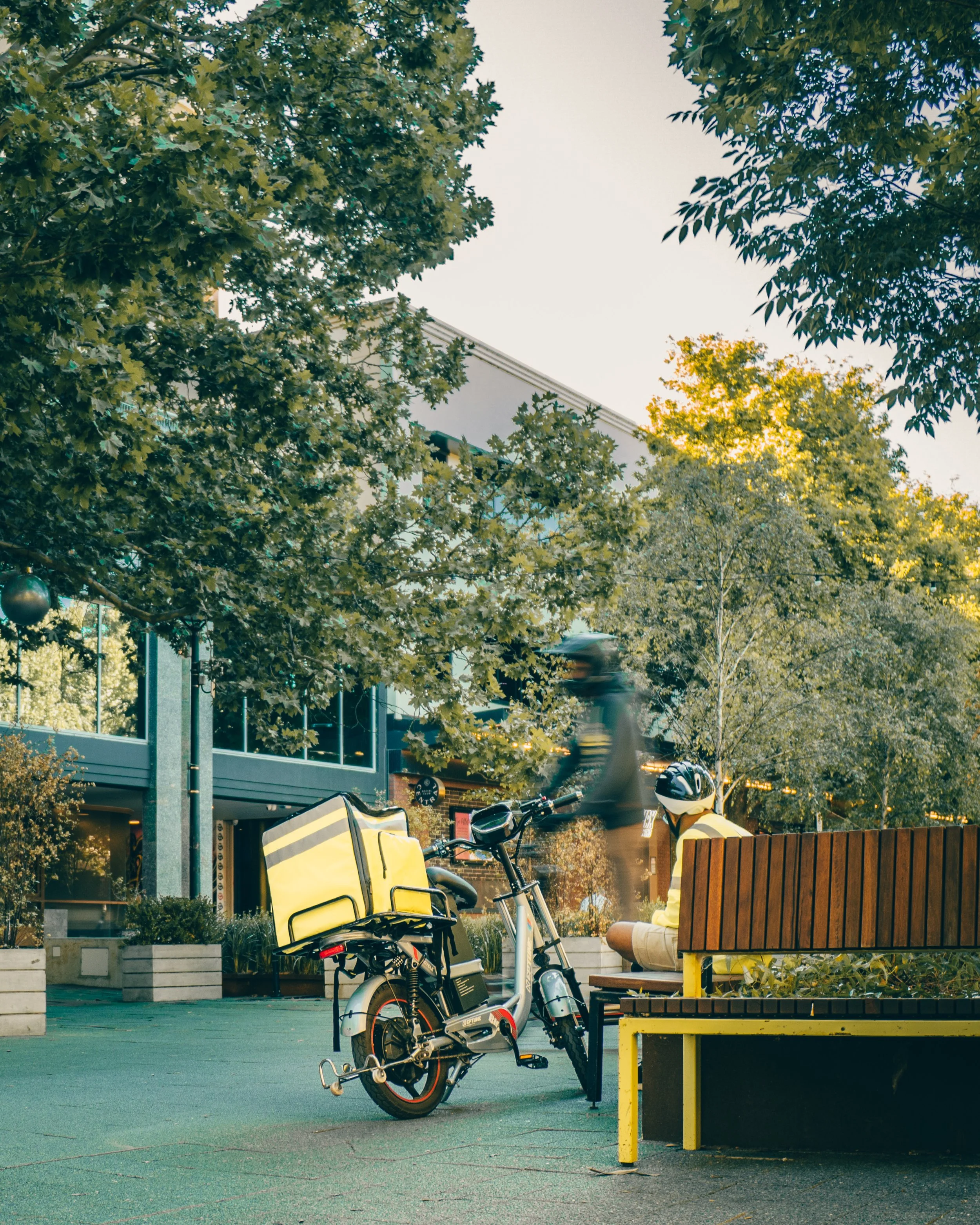
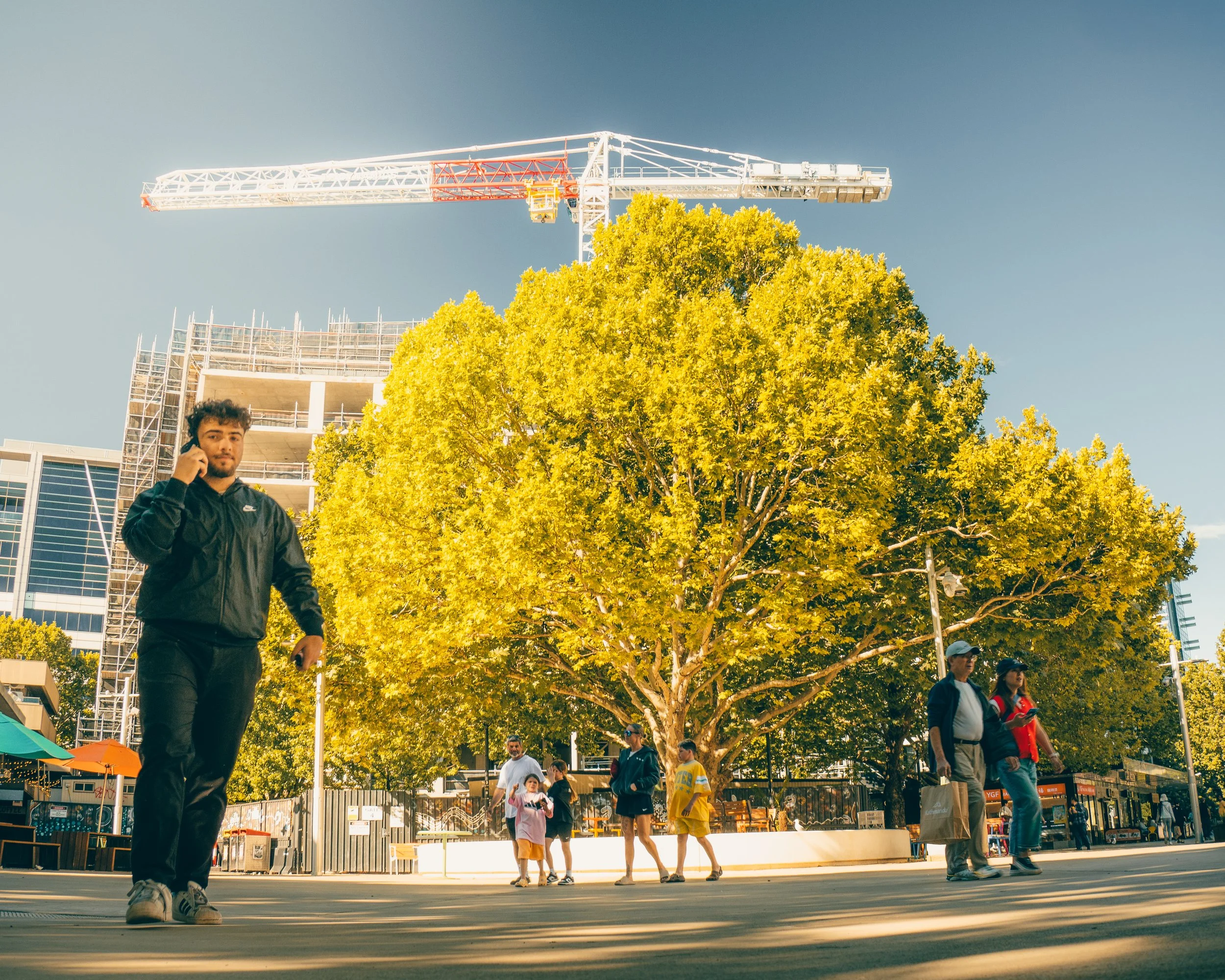
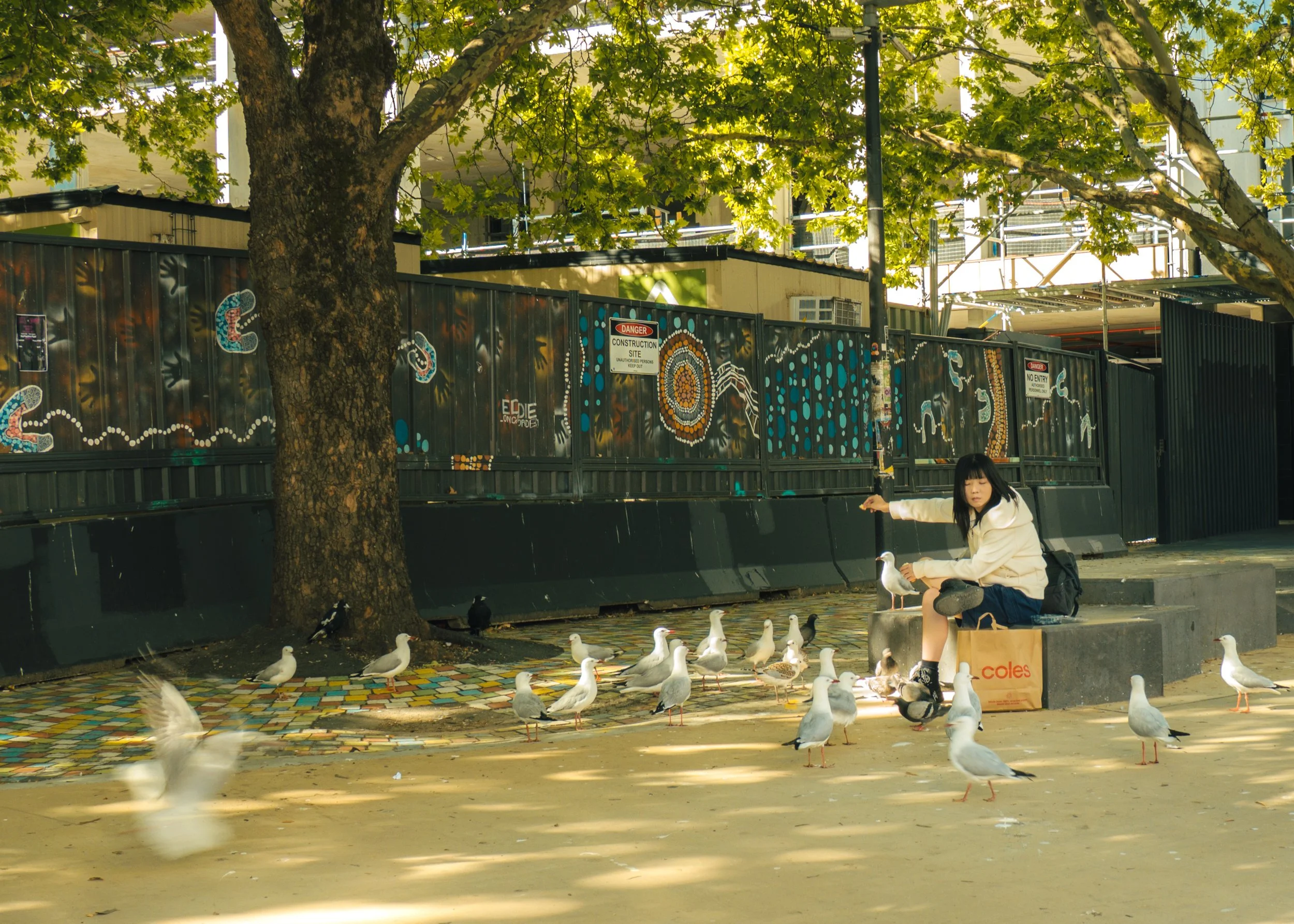
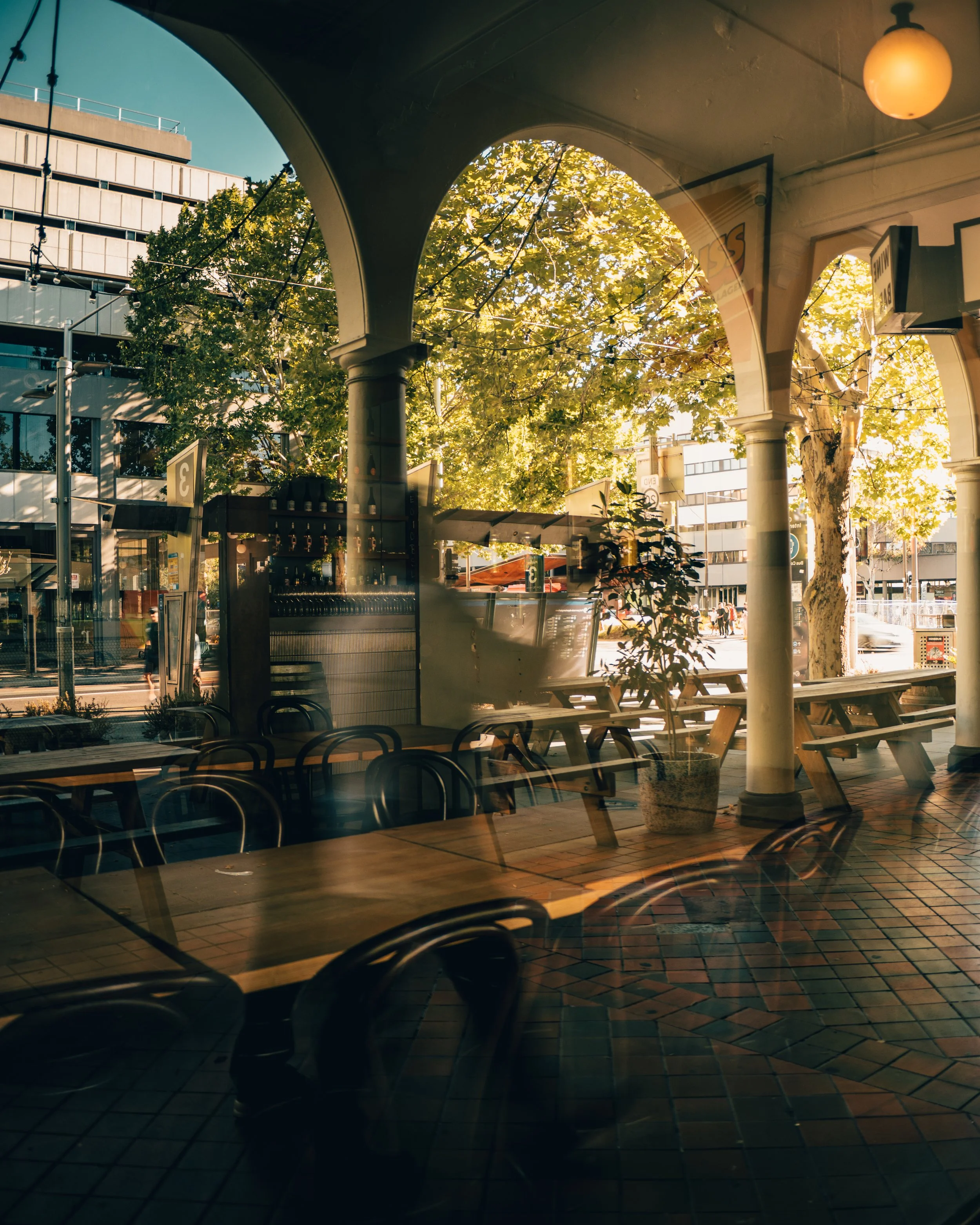
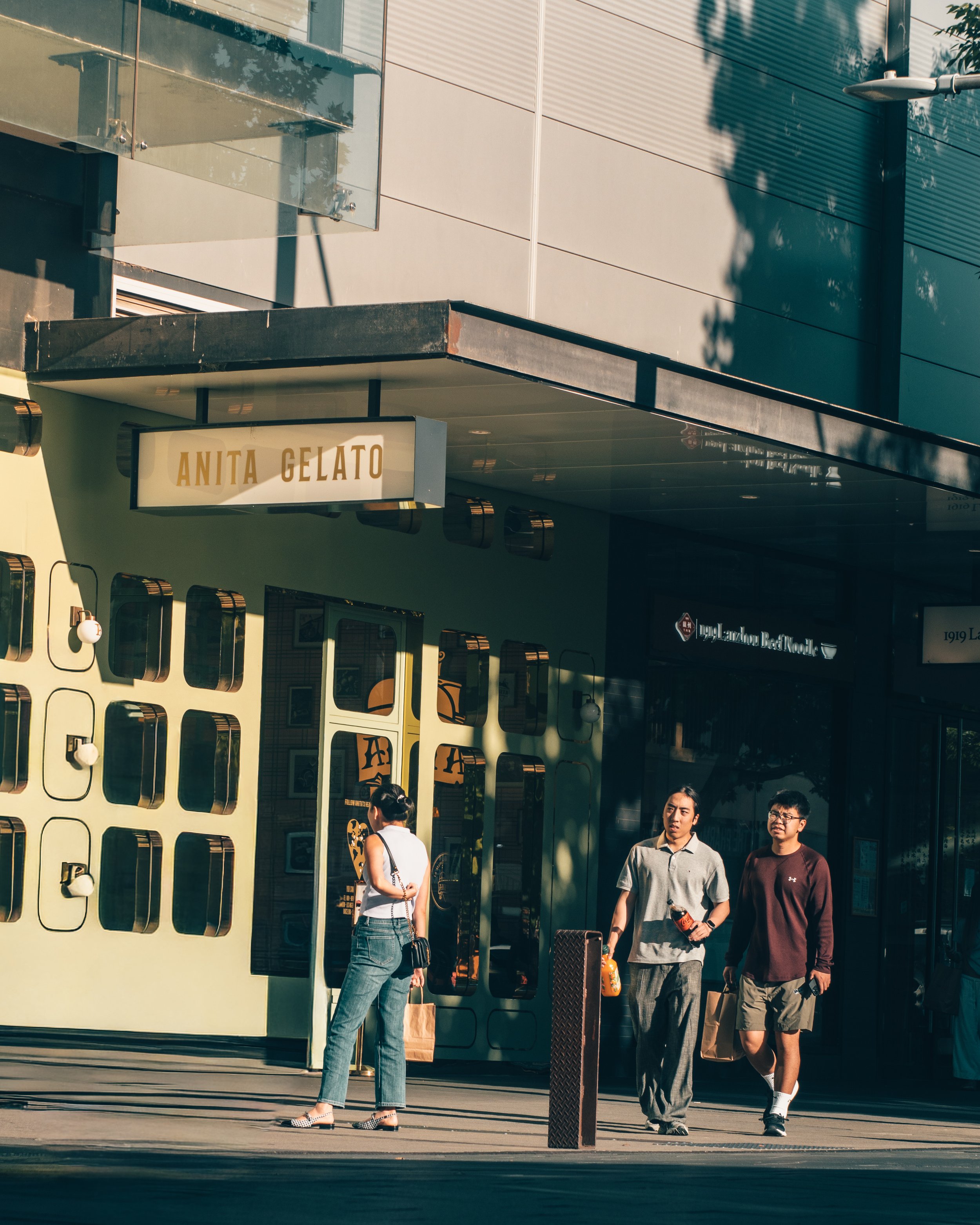
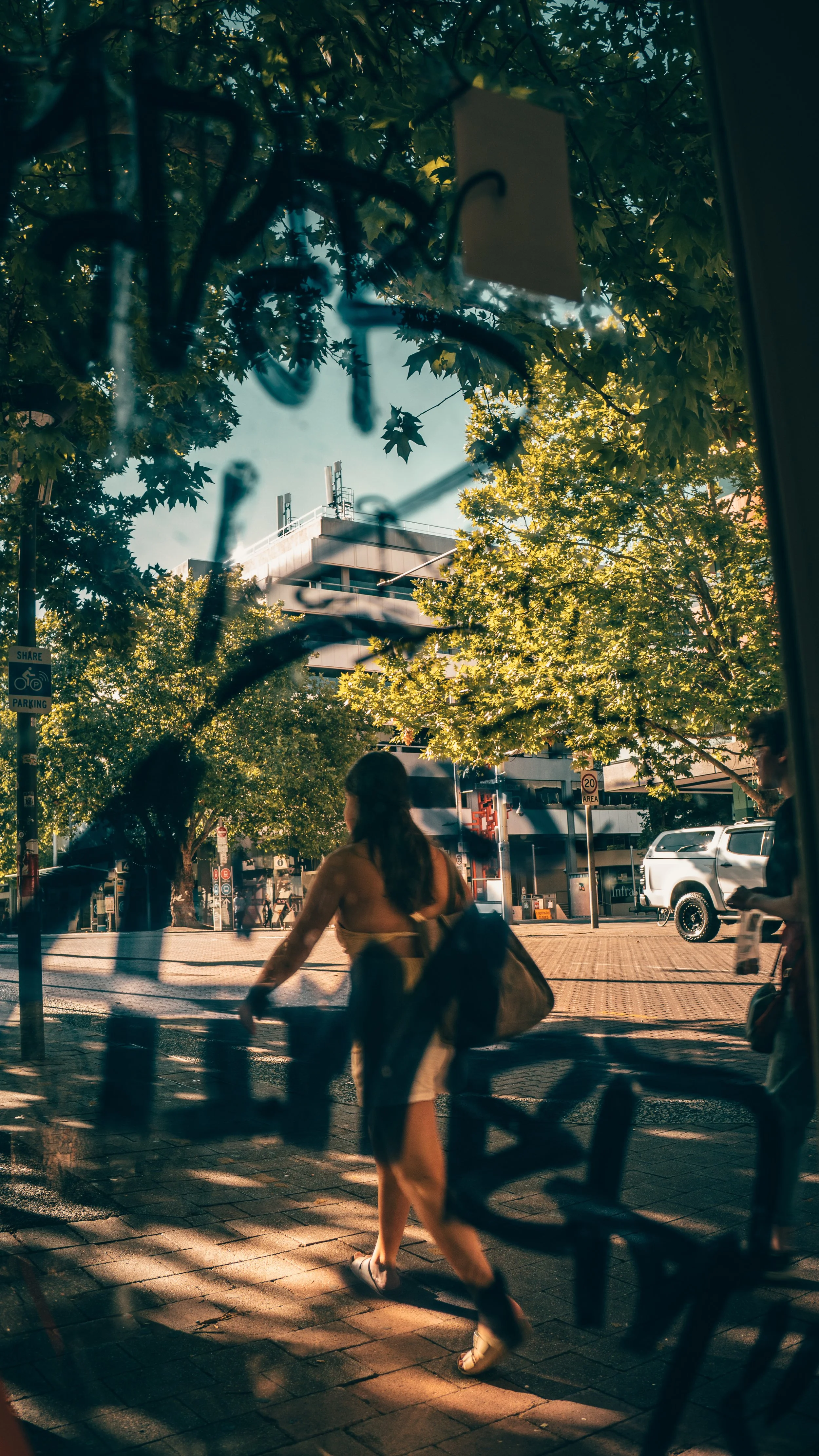
In the building’s alcove I was drawn by the repetition of arches, lamps and signage that all lined up like a rhythm track. I exposed for the corridor, letting the far exit glow without blowing out. In post, I pulled back highlights and nudged shadows cooler to separate planes. The person walking away adds just enough movement to keep it from feeling static. The beautiful traditional cursive of the sign for the Church of Scientology presented another juxtaposition of old vs new.
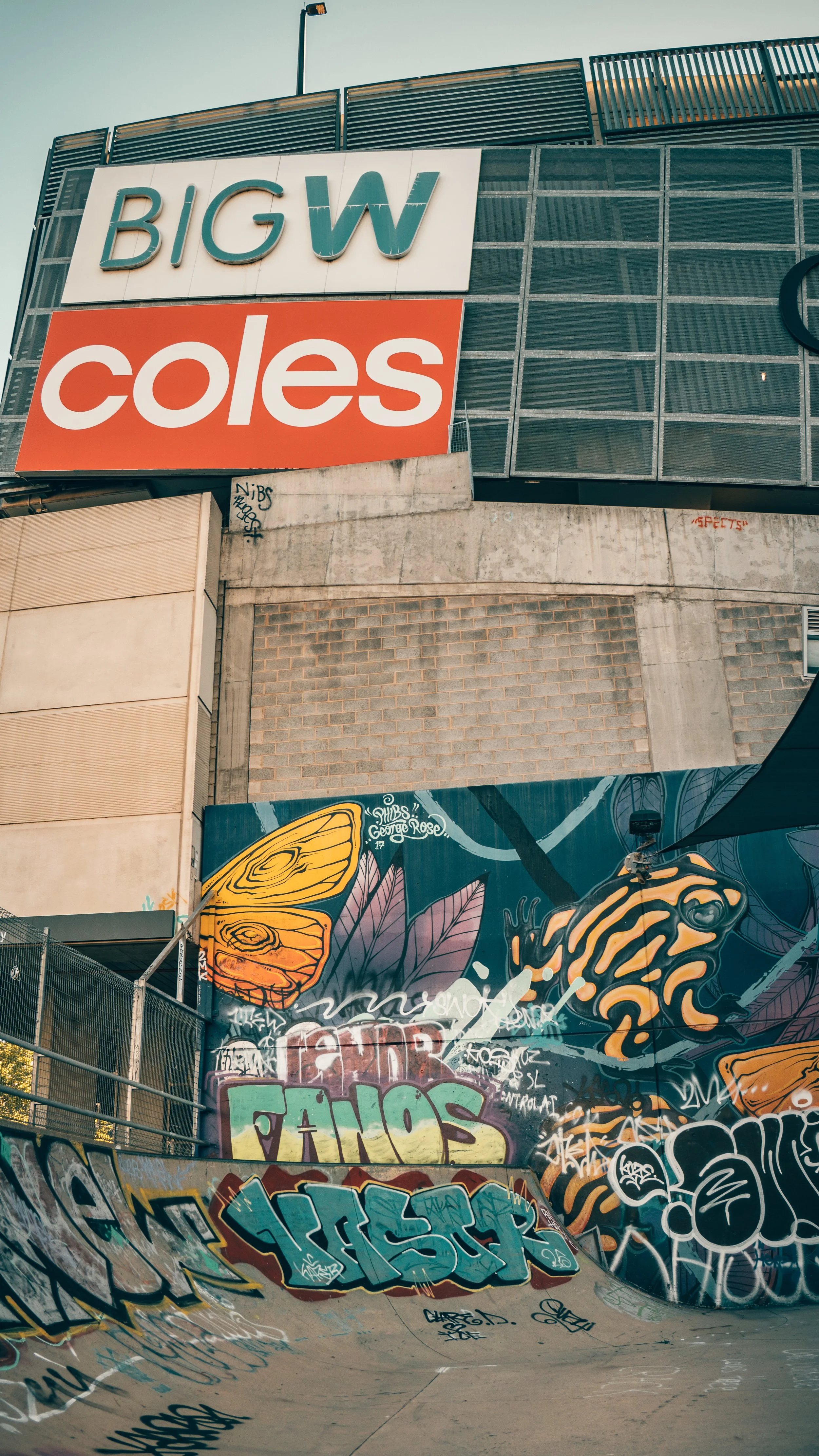
Fresh off my recent skate photography debut, I was hoping to capture more action at the Canberra Centre skate park, if it can be called that. No one was there, but this frame drew me with its contrast: the drab concrete ramps with the colourful graffiti art; skate ‘counter-culture’ meets corporate branding. I angled up so the ramp graffiti leads into the mural, then up to the signage.
Revelling in reflections
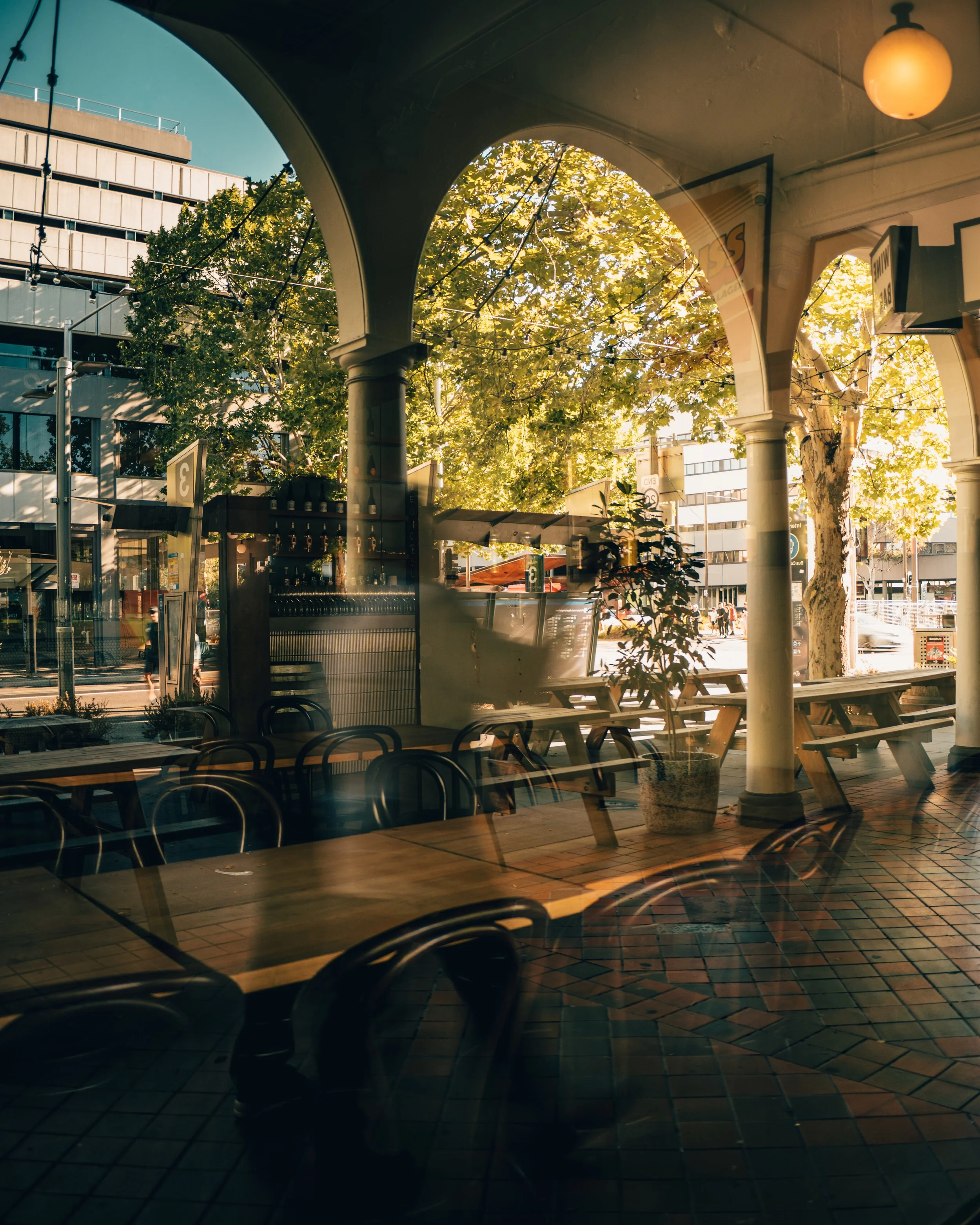
Glass provides artistic reflections magic and, importantly for the budding street photographer, allows you to inconspicuously capture your subjects without drawing attention. A restaurant window became a canvas, layering inside and outside worlds. Chairs and tiled floors mingle with trees and street signs, despite creating a somewhat cluttered composition. I lifted interior shadows and added clarity to the arches so the layers don’t blur into chaos. If I had to shoot this again, I’d stop down the variable ND filter to play with reflection strength.
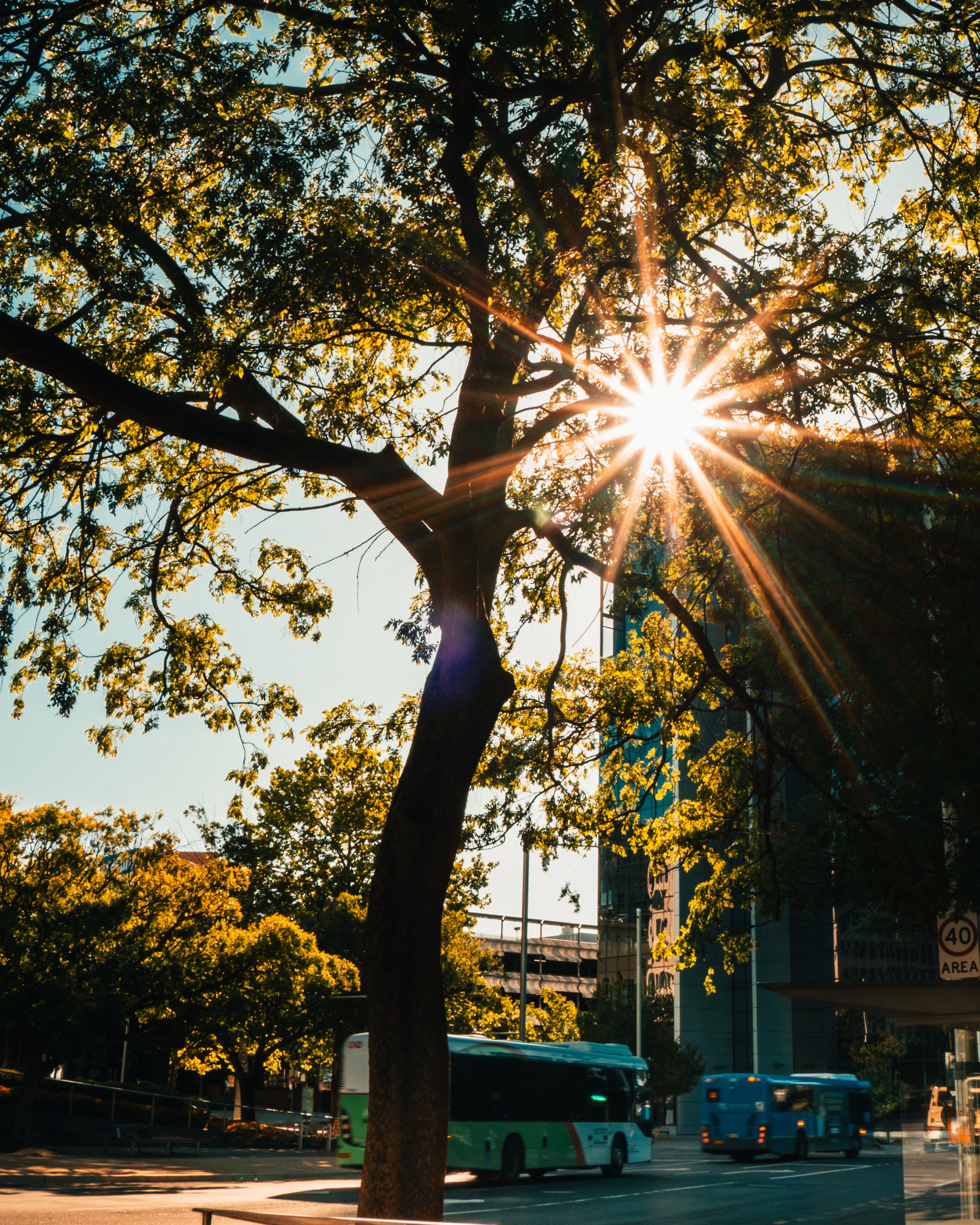
I love how light can draw lines. By placing the sun just off the trunk, I got a crisp starburst, rays slicing through branches like spokes. I shot at a small aperture (f/18) for sharp rays, then recovered highlights in post. The buses below hint at motion; again, the ND filter could add more drama with a slower shutter speed to add motion blur and, with it, a sense of time passing.
Every shot started with a question: How do I guide the eye? Sometimes it’s light carving leading lines. Sometimes it’s a foreground object acting as a frame. Shooting low exaggerates depth, while a slower shutter with a VND filter lets motion tell its own story. When you recognise these tools and use them with intent, even a quiet street corner can feel cinematic.
The man behind the music
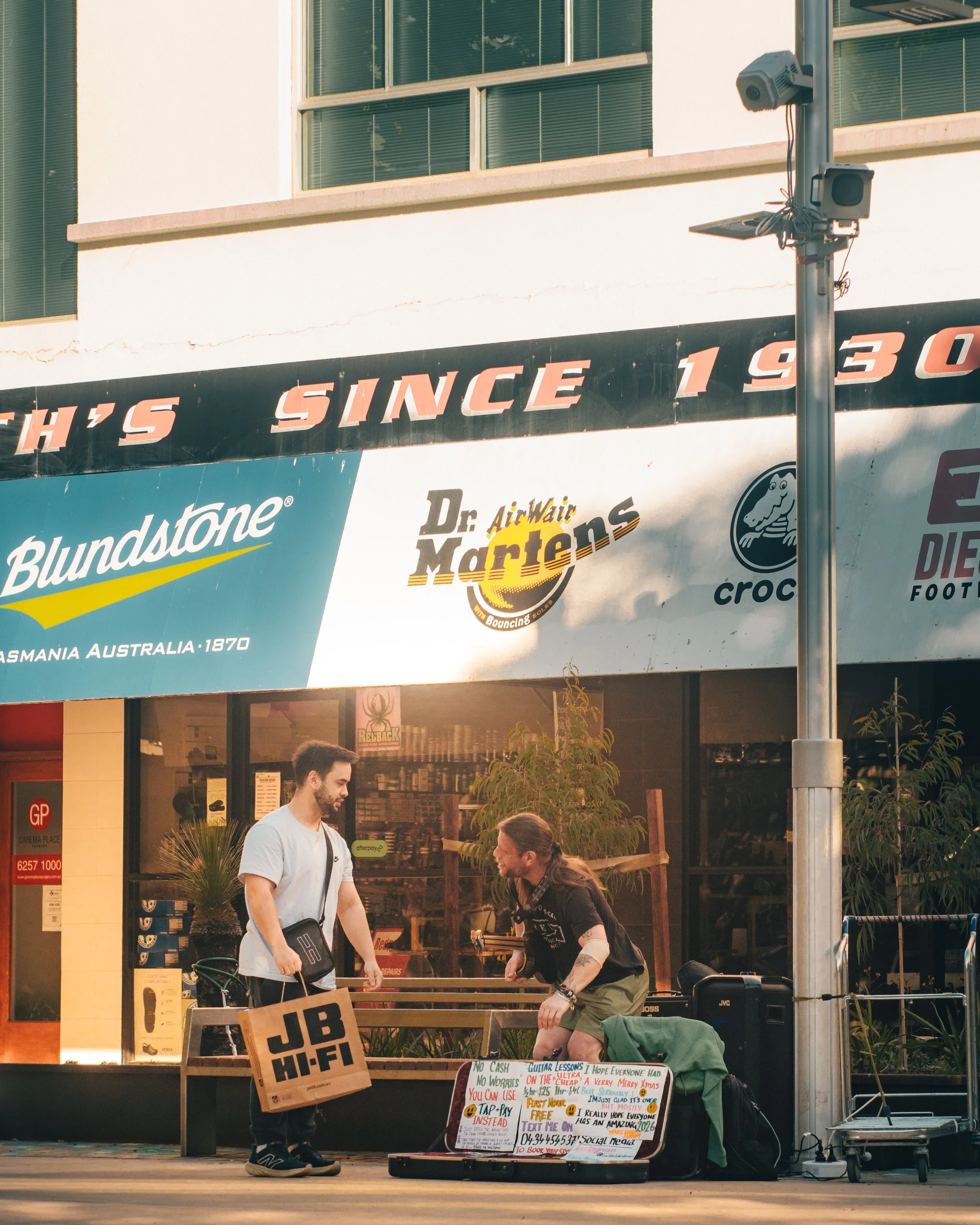
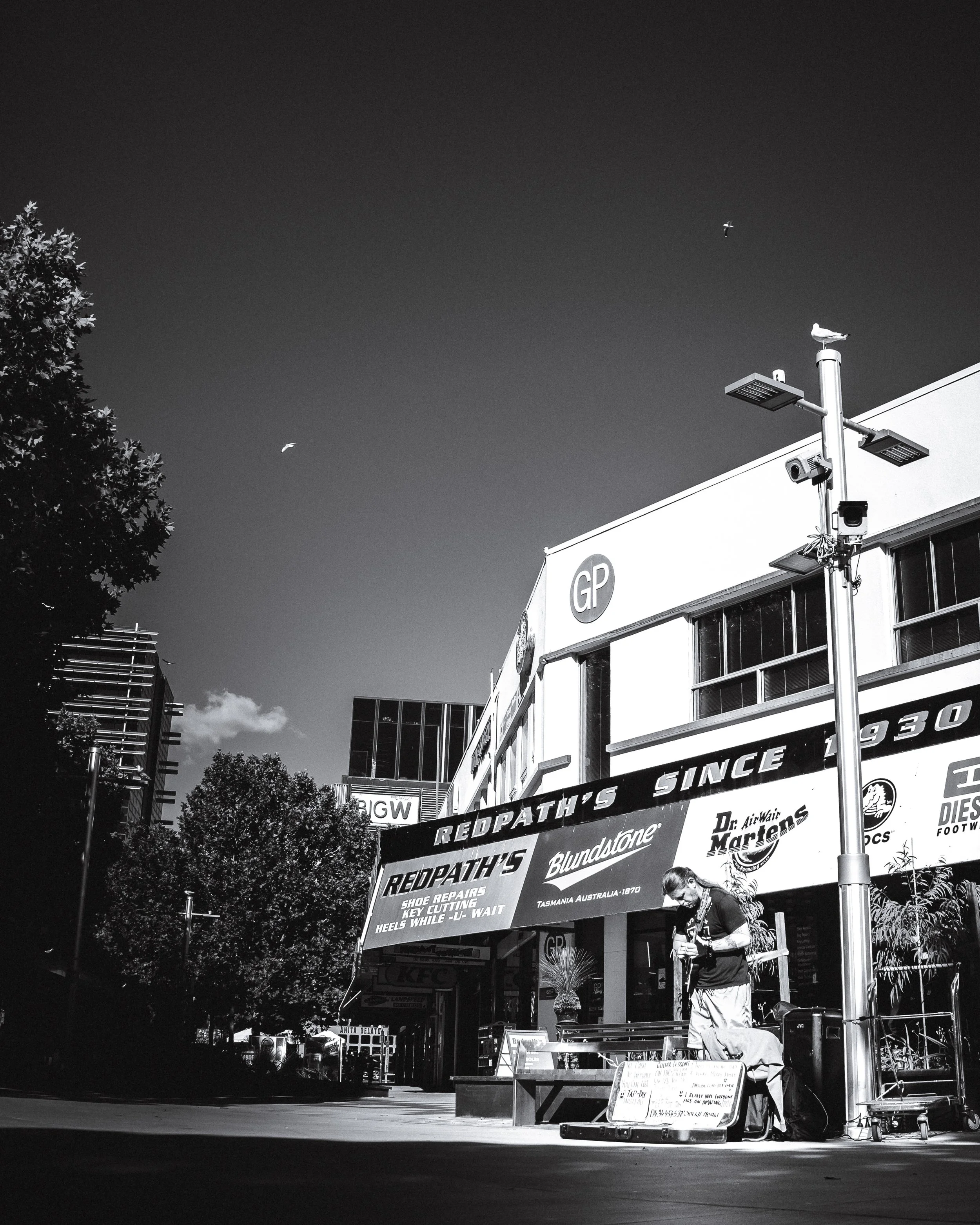
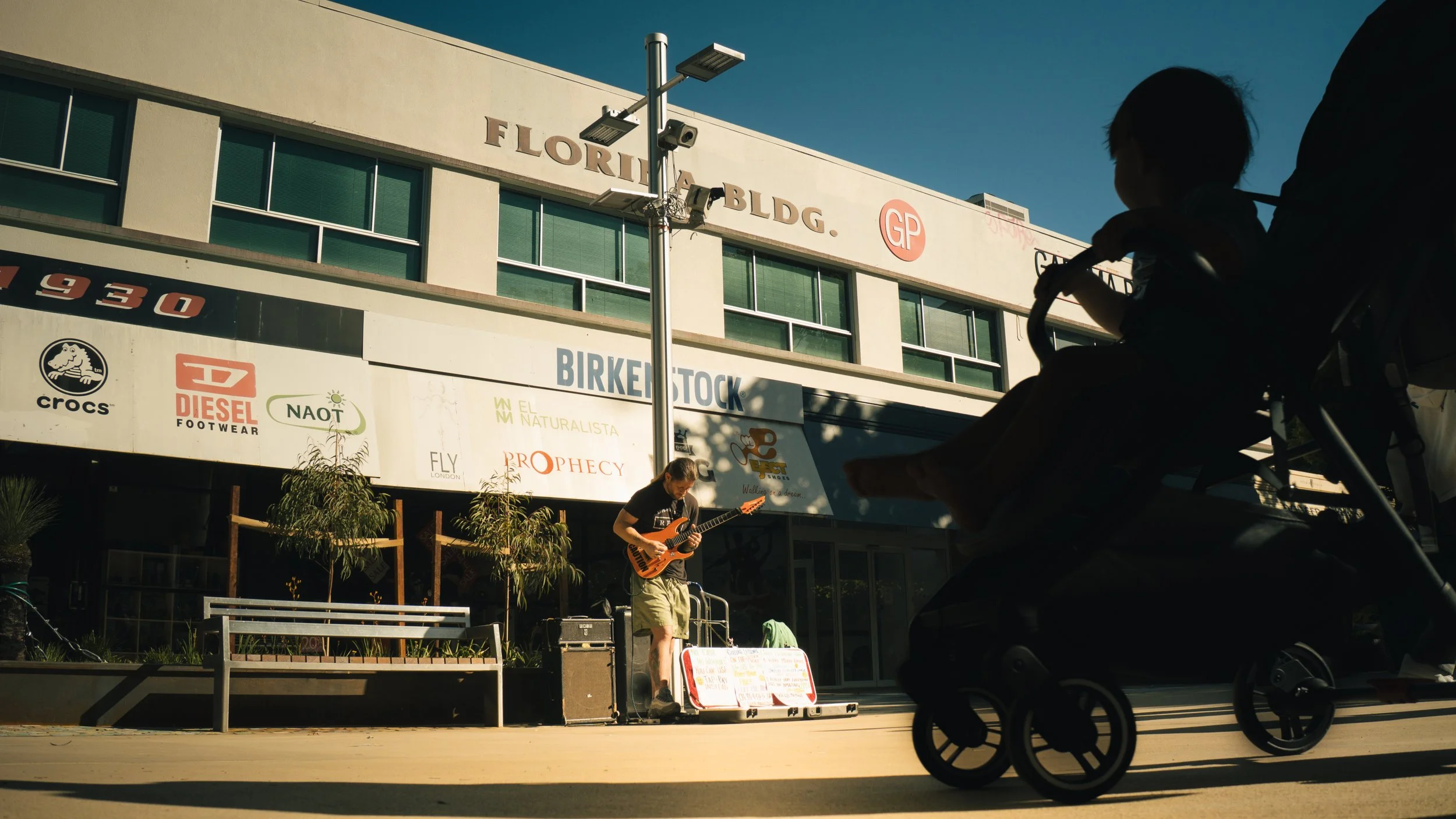
One of my most memorable shots from this shoot was of a solo guitarist and Garema Place identity, Lucious, whose improvised melodies create an engaging atmosphere wherever he plays in the city. Converting my establishing shot of him busking to black and white stripped away distractions, allowing the textures of the building, signage and pavement to take centre stage. The strong midday light created deep shadows and crisp highlights, which I used to frame Lucious against the bright façade. I also liked how the monochrome treatment made the seagulls overhead ‘pop’ in the sky.
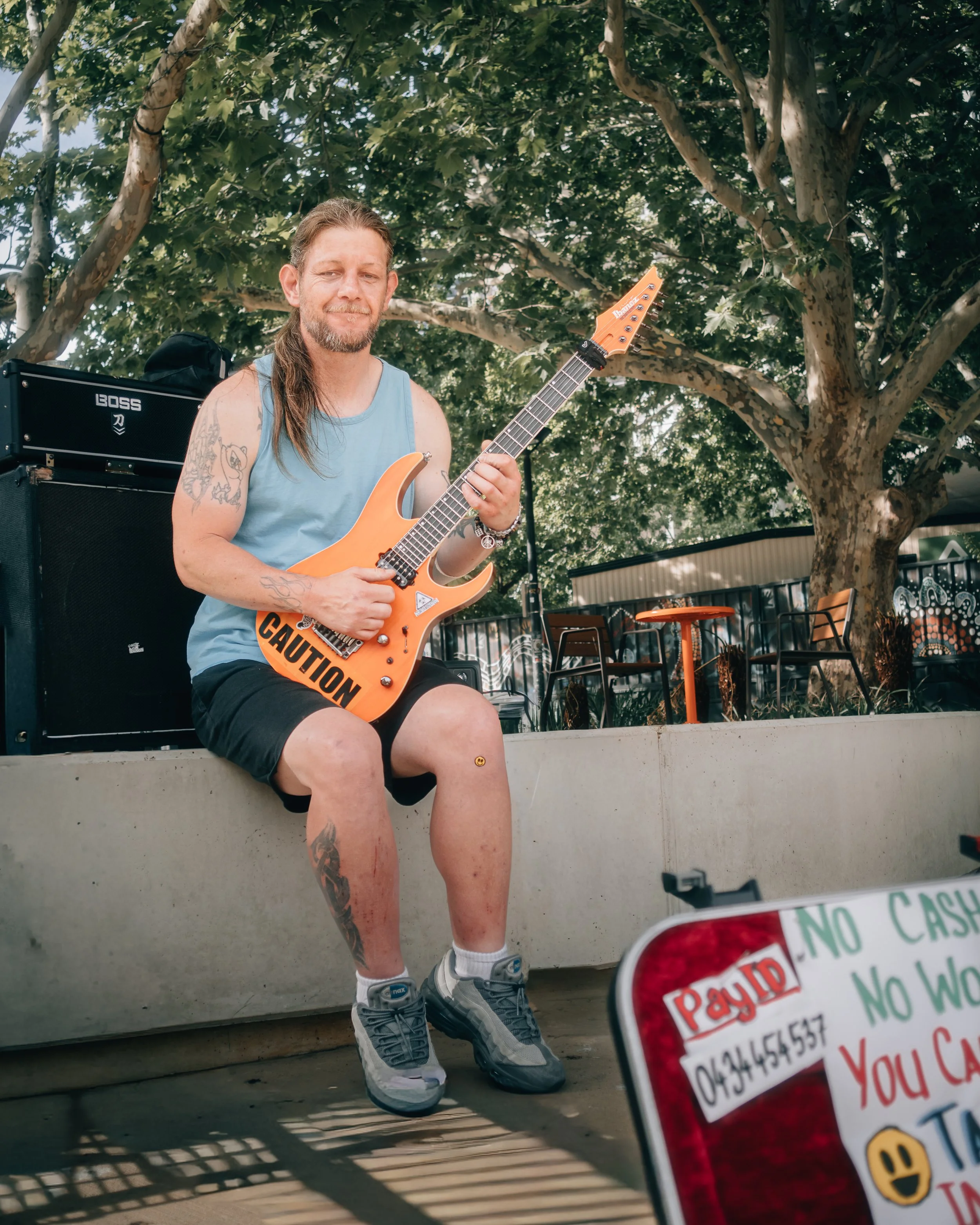
For this follow-up shot taken on New Year’s Day, I wanted to capture more intimacy and personality. Lucious was positioned in soft, natural light under the tree canopy, which diffused the harsh sun and created gentle highlights on the guitar. The shallow depth of field from this lens – the Laowa 17mm 4/1.7 – keeps attention on Lucious and his guitar while allowing the background to softly recede.
Naturally, I shared the photos with Lucious and made a small contribution courtesy of his tap-and-pay device. When I showed him my work, he even recognised a recent portrait subject as someone he went to Lyneham High School with – Canberra really can feel that small, sometimes!